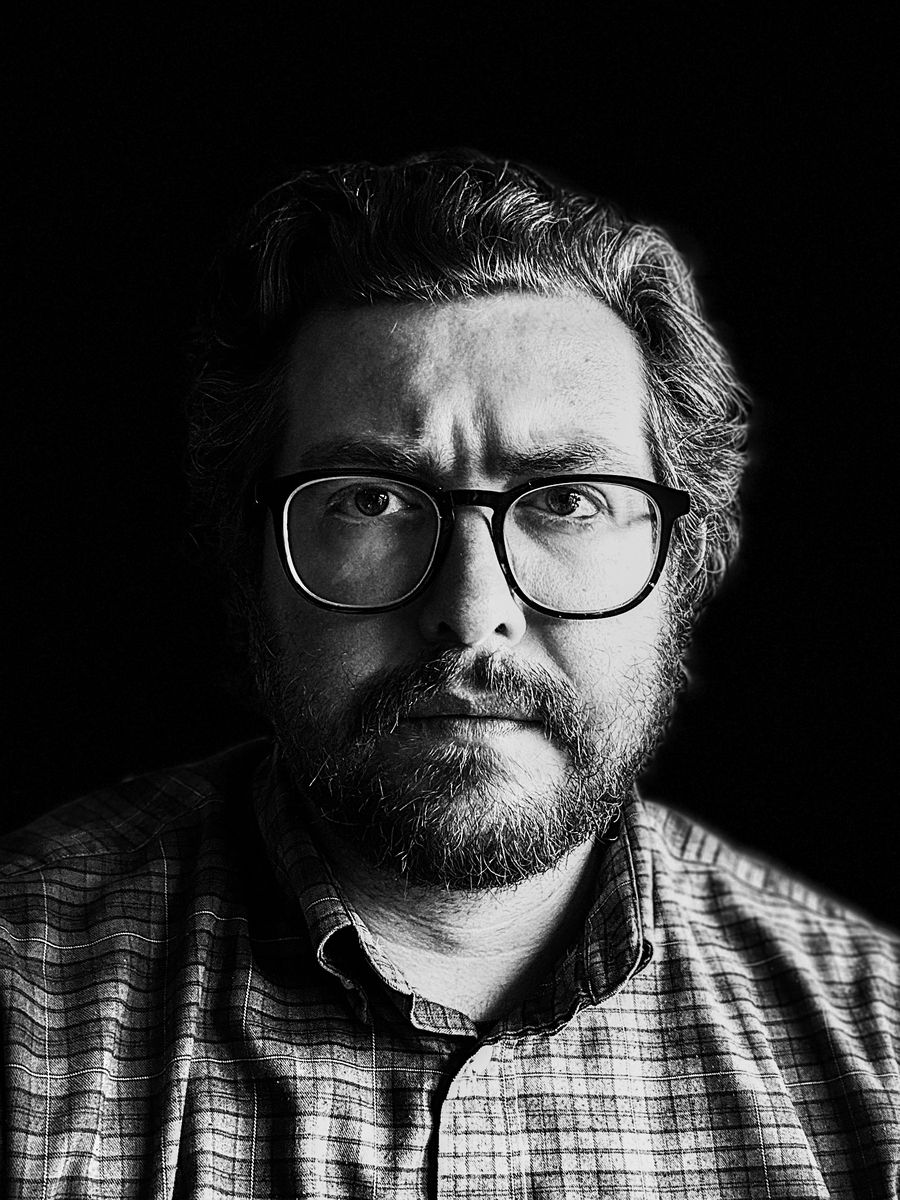

…that which is featured:
The Threshold Doctrine
an essay by Lance Marwood
“From vampires to cookie banners, the “threshold doctrine” reveals why we keep granting access to what can harm us.”
The vampire stands at the door. He is ancient, predatory, and infinitely stronger than you. He could tear the walls down. He could shatter the windows. But he doesn’t.
He waits.
He waits because of a rule older than cinema, older than novels, older than the English language itself: Evil cannot enter until it is invited.
In that moment of hesitation, the horror shifts. The danger isn’t that the monster will break in. The danger is that you will (for reasons you can’t explain) open the door yourself.
This is The Threshold Doctrine.
It’s the conviction that the most dangerous things in the world are powerless without our complicity. And it raises a question that haunts us from the Bronze Age to the Digital Age: Why are we so convinced that our destruction requires our consent?

The Architecture of Sacred Space
To understand the invitation requirement, we need to understand what a threshold actually means in mythological terms.
For most of human history, the doorway wasn’t just an architectural feature - it was a metaphysical boundary. The Romans had Janus, the two-faced god who presided over transitions, doorways, and beginnings. The ancient Israelites marked their doorposts with blood during Passover to distinguish the protected from the vulnerable. In Shinto tradition, torii gates mark the transition from mundane to sacred space. The concept isn’t “here’s where we put the door.” It’s “here’s where reality changes.”
The home, in this framework, isn’t merely shelter. It’s a pocket universe governed by its own rules, a space sanctified by the presence of its inhabitants, protected by accumulated ritual (whether conscious or not), and bounded by invisible walls that even supernatural entities must respect.
This sounds like primitive thinking until you realize we still believe it.
We “knock on wood” to avoid tempting fate.
We don’t say “Macbeth” in theatres.
We feel differently about a house once someone has died in it.
The threshold remains sacred even when we’ve forgotten why.

…of Verse & Vision

…that which is or may be learned or known


…these conversations we have about the process
TubeFreeks frontman Paul Van Valkenburgh joins Lance Marwood on MAKE // BREAK to talk band longevity, touring setbacks, vocal coaching, and how co-writing sharpened the new cycle, including “Flower” and Canvas.
You're reading Lowkey Hellish — essays on folklore, horror, philosophy, and the strange places where ancient fears meet modern anxieties.
The Author’s other work:
Support this work:
Forward to someone who'd appreciate it
Reply with your thoughts (we read everything)
Follow @lowkeyhellish for more
Explore the rest of the series so far:
If you like this, maybe you’ll like our other newsletters: